PROJECT
LIFECYCLE
THE RIGHT PARTNER
THE RIGHT SOLUTIONS
HOW AMP WORKS
Electrical procurement shouldn’t begin when the RFQ arrives. The decisions that determine the success of a major electrical package often happen months before material is ordered. Specifications, approved manufacturers, production capacity, long-lead equipment, procurement strategy, logistics, and required-on-site dates can all affect the construction schedule.
AMP is designed to engage early and remain involved throughout the project lifecycle.
From Engineering to Energization
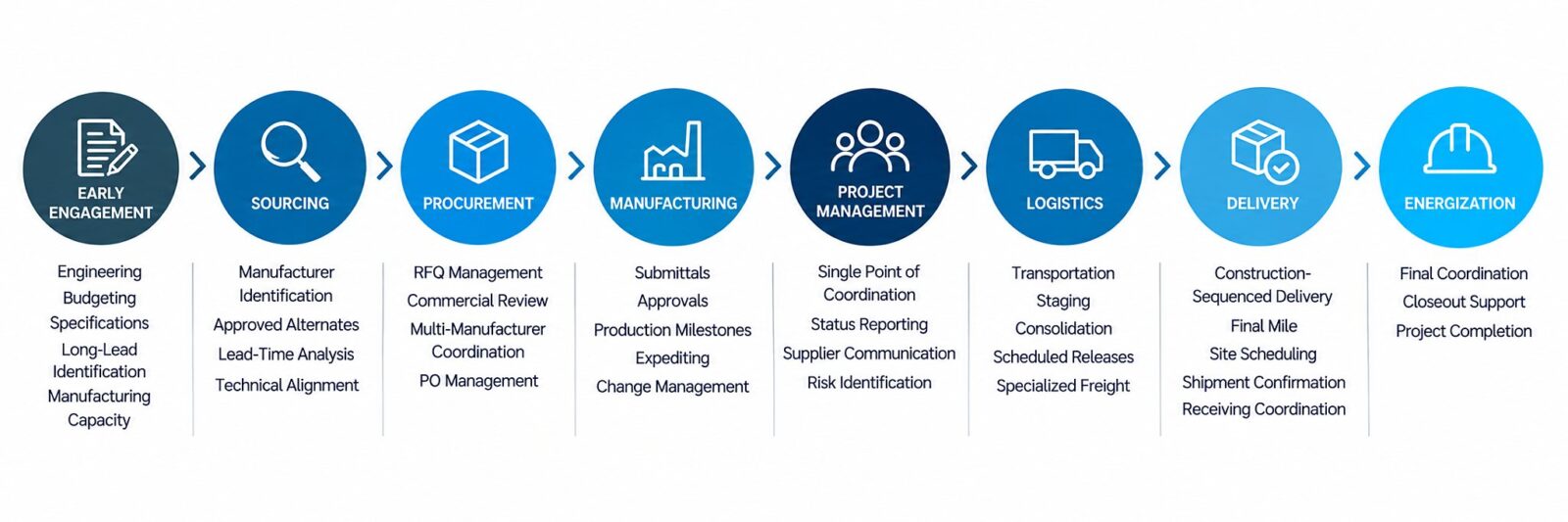

EARLY ENGAGEMENT
Solve Supply-Chain Problems Before They Become Schedule Problems
The earlier AMP understands the project, the more opportunity we have to identify potential sourcing, capacity, and schedule challenges. AMP can begin working with the project team during concept development, engineering, budgeting, specification, estimating, and preconstruction.
At this stage, we focus on the decisions that can ultimately affect procurement and the construction schedule. Earlier visibility creates more options.

ENGINEERED SOURCING
Find the Right Solution for the Requirement
Once AMP understands the project’s technical and schedule requirements, we begin developing the sourcing strategy. The objective is not to substitute products simply because something else is available. The objective is to find the best executable solution for the project. That may include evaluating:
Specified Manufacturers
Confirm capability, availability, lead times, and capacity.
Approved Alternates
Identify alternative manufacturers where specifications permit.
Technical Alignment
Match equipment and material capabilities with engineering requirements.
Manufacturing Capacity
Evaluate whether production capacity aligns with project quantities and required dates.
Lead-Time Analysis
Identify potential schedule conflicts before procurement.
Commercial Options
Evaluate sourcing alternatives based on the overall project requirement—not simply unit price.
PROJECT PROCUREMENT
One Project. Multiple Manufacturers. One Point of Coordination.
Large electrical packages quickly become fragmented. Transformers may come from one manufacturer. MV cable from another. Switchgear from another. Cable tray, grounding, conduit, controls, and specialty products may involve several more.
AMP helps coordinate those requirements around one project procurement strategy.
- RFQ Management
- Manufacturer Coordination
- Commercial Review
- Multi-Category Packages
- PO Management
- Documentation Coordination
- Schedule Alignment
We’re not managing individual orders. We’re helping manage the electrical supply package.

MANUFACTURING
Visibility Doesn’t Stop When the Order Is Placed
This is where many conventional procurement processes become reactive. 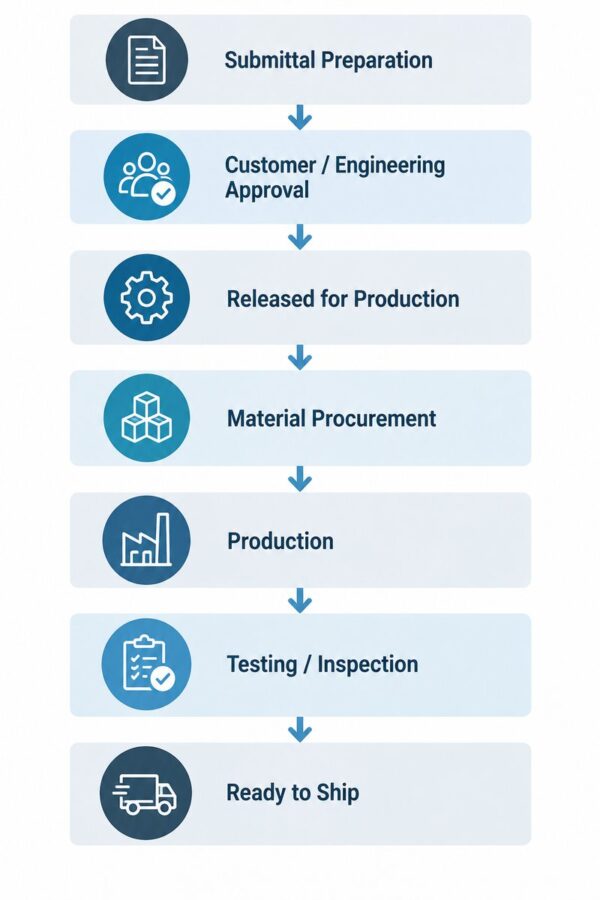 The PO is issued, and the project team waits for updates. AMP’s approach is different.
Critical equipment and materials should be actively tracked through manufacturing. AMP coordinates with suppliers to maintain visibility into key milestones and identify potential schedule changes as early as possible.
A promised ship date isn’t enough. Project teams need to know what’s happening between the PO and the shipment.
PROJECT MANAGEMENT & VISIBILITY
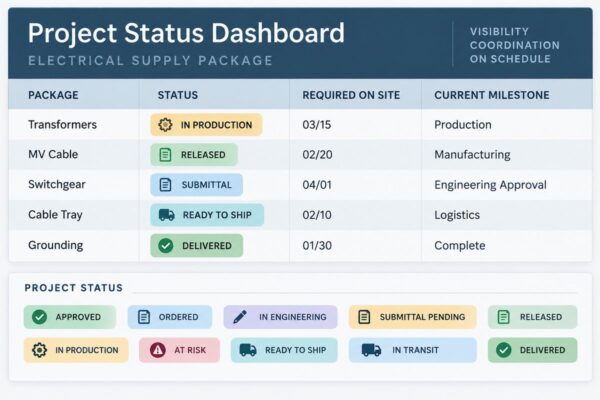
Know Where Your Project Stands
A large project may involve dozens—or eventually hundreds—of individual equipment and material requirements.
AMP’s project-management approach is designed to create a consolidated view of critical project information.
RISK & SCHEDULE MANAGEMENT
See the Problem Before It Reaches the Jobsite
Supply-chain visibility is only useful if someone acts on the information. AMP’s project-management process helps identify issues such as manufacturing delays, approval delays, material constraints, capacity changes, shipping risk, required-date changes, specification changes, and supplier issues. When potential schedule risk appears, AMP works with the appropriate supplier and project stakeholders to understand the issue and evaluate available options.
- Expediting
- Alternate manufacturing capacity
- Approved product alternatives
- Partial releases
- Shipment prioritization
- Alternative transportation
- Re-sequenced delivery

LOGISTICS & STAGING
Procurement Doesn’t End at the Factory Door
Manufacturing completion does not necessarily mean the jobsite is ready for the equipment. AMP incorporates logistics into the project plan.
Depending on project requirements, the logistics strategy can include:
Manufacturer Pickup
Coordinate equipment pickup directly from the manufacturer.
Dedicated Transportation
Arrange transportation around project-specific equipment and schedule requirements.
Specialized Freight
Coordinate freight for oversized, sensitive, or specialized electrical equipment.
Consolidation
Bring material from multiple sources together around the project delivery plan.
Warehousing & Staging
Hold and stage material when manufacturing completion and site readiness do not align.
Scheduled Releases
Release equipment and material according to construction requirements.
Multi-Site Coordination
Coordinate material requirements across multiple project locations.
Final-Mile Delivery & Jobsite Scheduling
Coordinate final delivery around site readiness and the construction schedule.
DELIVERY
The Right Material. The Right Location. The Right Time.
Large projects don’t always need everything at once. Equipment may need to arrive according to building, area, phase, floor, electrical room, installation sequence, or construction milestone.
AMP can coordinate staged releases and delivery schedules around the project’s construction sequence. That reduces unnecessary material handling, congestion, storage requirements, and the risk associated with equipment arriving before the site is ready.
As equipment and materials move to the project site, AMP maintains coordination through final delivery.
Project closeout can include:
- Shipment Confirmation
- Delivery Tracking
- Receiving Coordination
- Documentation
- Outstanding Material Tracking
- Final Release Management
The objective is simple: Complete the electrical supply commitment—not simply ship the PO.
ENERGIZATION
From Engineering to Energization
Energization is where the work performed throughout the project lifecycle comes together. Equipment has been sourced, manufactured, tracked, staged, and delivered around the needs of the construction schedule. But AMP’s objective isn’t simply to get material to the jobsite. It is to help keep the electrical supply strategy aligned with the project from early engineering through final delivery and closeout.
⇒ At the beginning of the project, we ask: What are you building?
⇒ Throughout the project, we ask: What does the project need next?
And as the project moves toward completion, the objective remains the same: keep equipment, material, suppliers, logistics, and required dates coordinated around the construction schedule.
FROM ENGINEERING TO ENERGIZATION
One Project—One Coordinated Electrical Supply Strategy